Not just another AI patent drafting platform.
InventGenie is not a law firm and does not provide legal advice.
Disclosure in, filing-ready draft out
Five stages, each feeding the next from the same invention model.
Everything in one workflow
No stitching together a chatbot, a search tool and a draftsman.
Claims + specification
Claim tree, abstract, background and detailed description from one connected record.
Prior art before you file
10M+ USPTO, EPO and CIPO records searched semantically, amendments scored for novelty gain.
Figures with numerals
Sketches become labelled figures with lead lines and numerals that match the spec text.
Confidential by default
Encrypted, and never used for model training — a public disclosure can cost you the filing.
An editable invention model
See how the AI understood your invention and fix it directly, instead of re-prompting.
Export and file
Validated draft out as DOCX, ready to submit through USPTO Patent Center yourself.
Disclosure
Upload a document or fill the invention form. Rough is fine.
Innovation Engine
Alternative embodiments by inventive principle. You pick what to keep.
Knowledge Graph
The typed ontology is built — and you can correct it.
Claims + Prior Art
Claim tree generated, then tested against the prior art corpus.
Validate & Export
Scored section by section, then exported as DOCX.
It helps you invent — not just write it up.
idea
principles
embodiments
what stays
Most AI tools reformat what you already thought of. The Innovation Engine works the contradiction in your design, proposing alternatives grouped by inventive principle — the method engineers use to break a design deadlock. You choose what stays, so the disclosure widens before a claim is written.
Prior art is checked while you draft, not after you file.
while you draft
A search run after the draft is finished only tells you what you already lost. InventGenie searches while the claims are still forming, retrieving conceptual overlap that keyword search cannot find. Every hit is scored, and each suggested amendment is scored for novelty gain — so you meet the blocking reference while amending is still free.
It understands your invention, not just your disclosure.
Before drafting begins, your disclosure is read as a structure, not a document — decomposed into a typed knowledge graph of components, functions, constraints and the relations between them. Everything downstream is generated against that graph, which is why the sections do not contradict each other. And the graph is yours to edit — change how your invention is understood, and every section downstream follows.
Create highly ephemeral compute units that are instantiated on-demand for short-lived tasks, and immediately discarded after completion; orchestration and redundancy provide reliability while the disposability optimizes latency and throughput.
Use ephemeral data artifacts and single-use inference/pipeline stages that are regenerated frequently to deliver low-latency results while preserving correctness through versioned snapshots and robust fallback mechanisms.
Built by an inventor,
for inventors.
Dr. Simon Park is a professor of mechanical and manufacturing engineering at the University of Calgary, founder of five deep-tech companies, and a named inventor on granted US patents in nanocomposite sensing. InventGenie is the drafting process he wanted for his own filings.

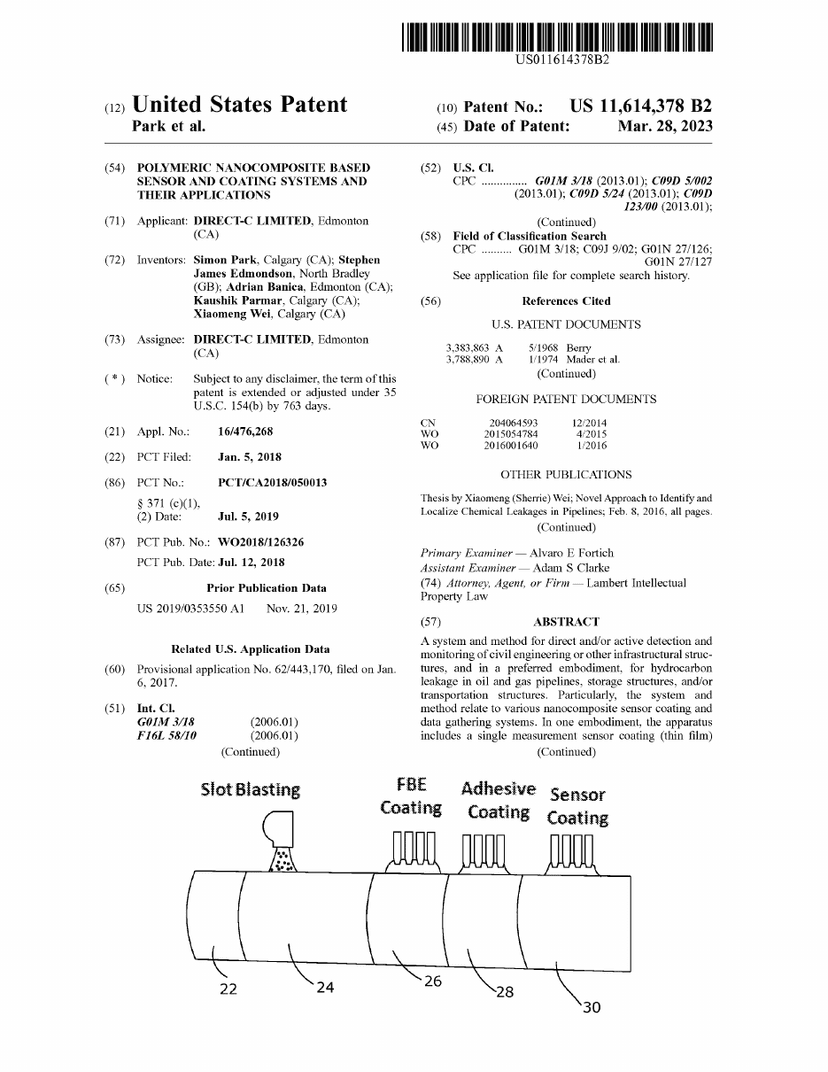
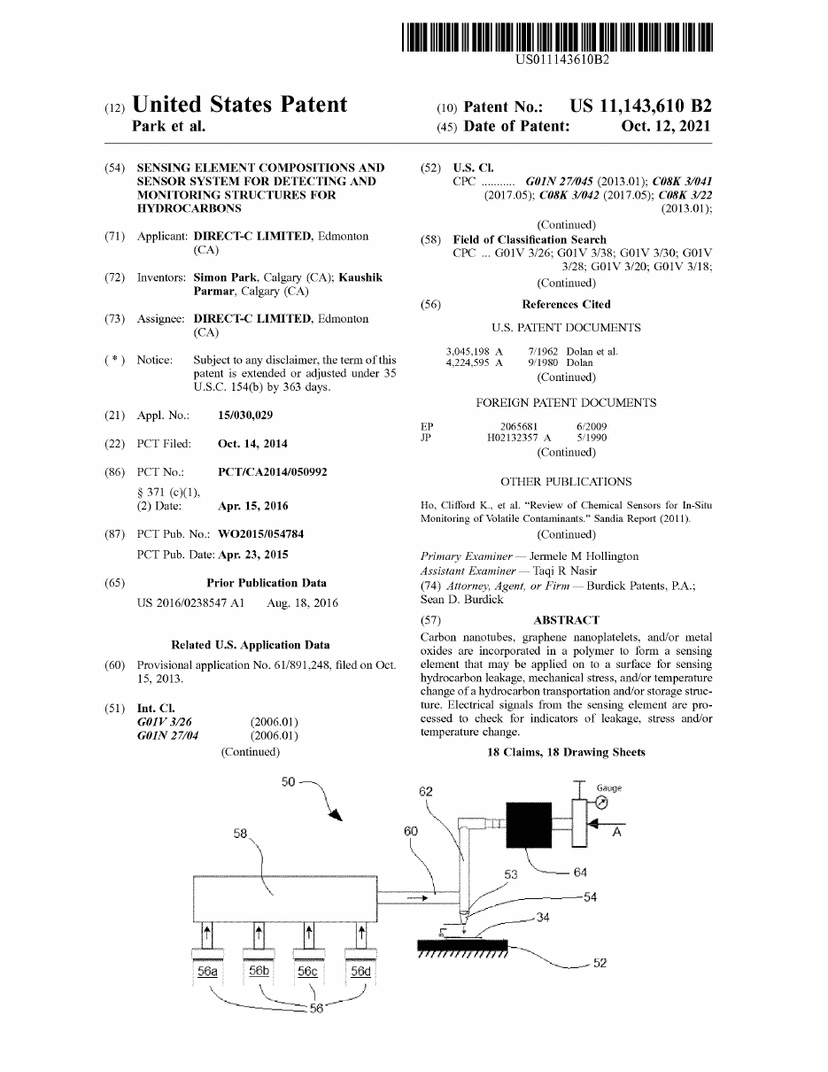
US 11,614,378 started life as provisional 62/443,170 — the step InventGenie is built for.
The founders who filed with it
They brought us a rough disclosure. They left with a draft.

“We came in with a rough idea and a whiteboard photo. What came out actually read like a patent — the prior art pass surfaced two overlaps we hadn't thought about, and we reshaped the claims before spending a dollar on outside counsel. It compressed weeks into an afternoon.”


“InventGenie made the whole process simple and fast. I was impressed by how detailed the draft was compared to anything I've tried before. It gave me confidence that my idea was being protected the right way.”


“The system gave me clear, high-quality patent drafts in a fraction of the time I expected. I've tried using general AI tools before, but nothing comes close to the accuracy and structure InventGenie provides.”

Check out our free eBook
A practical guide to novelty, claims, specifications, and filing strategy — from provisional to grant.